Can a Small Tear in Your Retina Be Treated Before It Causes Retinal Detachment?
Published on: 2026-11-18
As we observe World Diabetes Awareness Month in November, healthcare communities worldwide are turning their focus toward systemic conditions that silently impact vital organs; most notably, our eyes.
Among the most critical yet under-discussed threats to eye health are retinal complications.
If you or a loved one has ever experienced sudden flashes of light or new floaters, you might wonder how vulnerable your vision truly is. Can a small tear in the retina be managed before it escalates into a vision-threatening emergency? The short answer is a resounding yes.
But, timely intervention can completely change your visual outcome.
What is a Retinal Tear?
The retina is the delicate, light-sensitive layer of tissue lining the inner back part of your eye. It acts much like the film in a camera, converting light into neural signals that your brain interprets as images.
A small tear in the retina occurs when the vitreous (the gel-like substance filling your eye) pulls away from the retina, tugging hard enough to rip the tissue. When this happens, it creates an opening through which fluid can seep underneath, potentially lifting the retina away from its underlying support structures.
What causes a tear in the retina?
While anyone can experience a retinal tear, certain factors increase susceptibility:
- Age-related changes: As we age, the vitreous gel shrinks and liquefies, pulling away from the retinal surface (posterior vitreous detachment).
- Nearsightedness (Myopia): Nearsighted eyes are typically longer, stretching and thinning the retinal tissue, making it more prone to tears.
- Eye trauma or previous eye surgery: Physi
cal injury or past procedures like cataract surgery can alter internal eye dynamics.
Retinal Tear Vs Retinal Detachment
A retinal tear is a break or rip in the tissue. Retinal detachment, on the other hand, is the more severe consequence that occurs when fluid passes through that tear, causing the retina to peel away from the wall of the eye. Think of a retinal tear as a small structural leak in a dam, whereas retinal detachment is a major structural failure. Treating the tear early prevents the breach from widening.
Can a small Retinal Tear heal on its own?
A common myth is that a small tear in the retina can heal or scar over naturally without professional intervention. In reality, retinal tissue lacks the ability to self-repair in a way that secures it back to the eye wall safely. Because the shifting vitreous continues to exert traction on the edges of the tear, leaving it unaddressed heavily increases the likelihood that it will progress into a full detachment. Seeking professional evaluation is vital.
Why do Retinal Tears need prompt action?
Time is vision. Once a tear progresses to a detachment, treating it becomes far more complex, requiring invasive surgery, and the risk of permanent vision loss multiplies significantly. Catching and securing a tear early acts as an insurance policy for your sight, halting the cascade of damage before it threatens your central and peripheral vision.
What are the available treatment options?
When diagnosed early by a qualified professional specializing in retinal tear treatment, minor tears can be managed quickly and effectively in an outpatient setting. The primary goals are to seal the edges of the tear and anchor the retina to the back wall of the eye. Common interventions include:
- Laser photocoagulation: A specialized medical laser is used to create tiny, precise burns around the retinal tear. As these microscopic burns heal, they form a permanent scar tissue "welding" the retina down, preventing fluid from leaking underneath.
- Cryopexy where clinically appropriate: Alternatively known as freezing therapy, a freezing probe is applied to the outside surface of the eye corresponding to the location of the tear. The extreme cold triggers a localized inflammatory response that heals into a secure scar, sealing the tear.
- Surgical treatment if retinal detachment develops: If the tear has already progressed into a detachment, more intensive retinal detachment treatment such as vitrectomy, scleral buckling, or pneumatic retinopexy; becomes necessary to reposition and reattach the tissue.
What happens during Retinal Assessment?
If you report symptoms like sudden floaters or flashes, a retina specialist near me will perform a comprehensive dilated eye examination. Using advanced diagnostic tools such as optical coherence tomography (OCT) and indirect ophthalmoscopy, the specialist maps the entire perimeter of your retina to locate any micro-tears, evaluate vitreous traction, and determine the safest path forward.
What should patients expect after treatment?
Procedures like laser photocoagulation or cryopexy are typically performed under local anesthesia and take only a short time. Afterward, patients can usually return home the same day. You might experience mild irritation, temporary blurriness from the dilation drops, or slight discomfort. Your specialist will provide clear guidelines regarding activity restrictions such as avoiding heavy lifting or strenuous exercise, to ensure the treated area heals securely.
When to visit a Retina Specialist immediately?
Certain "red flag" symptoms demand emergency medical attention. Consult an eye care professional right away if you experience:
- A sudden, dramatic increase in new floaters (spots, cobwebs, or specks drifting in your vision).
- Frequent flashes of light in one or both eyes.
- The sudden appearance of a dark shadow, curtain, or gray veil moving across any part of your visual field.
Where to seek Retinal Treatment in Kozhikode
Accessing specialized care promptly is essential to preserving your long-term sight. For those seeking expert retinal tear treatment in Kozhikode, advanced diagnostic infrastructure and skilled surgical expertise are readily available at Malabar Maxivision hospital. Whether you need a routine screening, preventative laser therapy, or comprehensive retina surgery in Kozhikode, consulting an experienced retinal specialist near you ensures that even the smallest retinal concerns receive world-class attention.
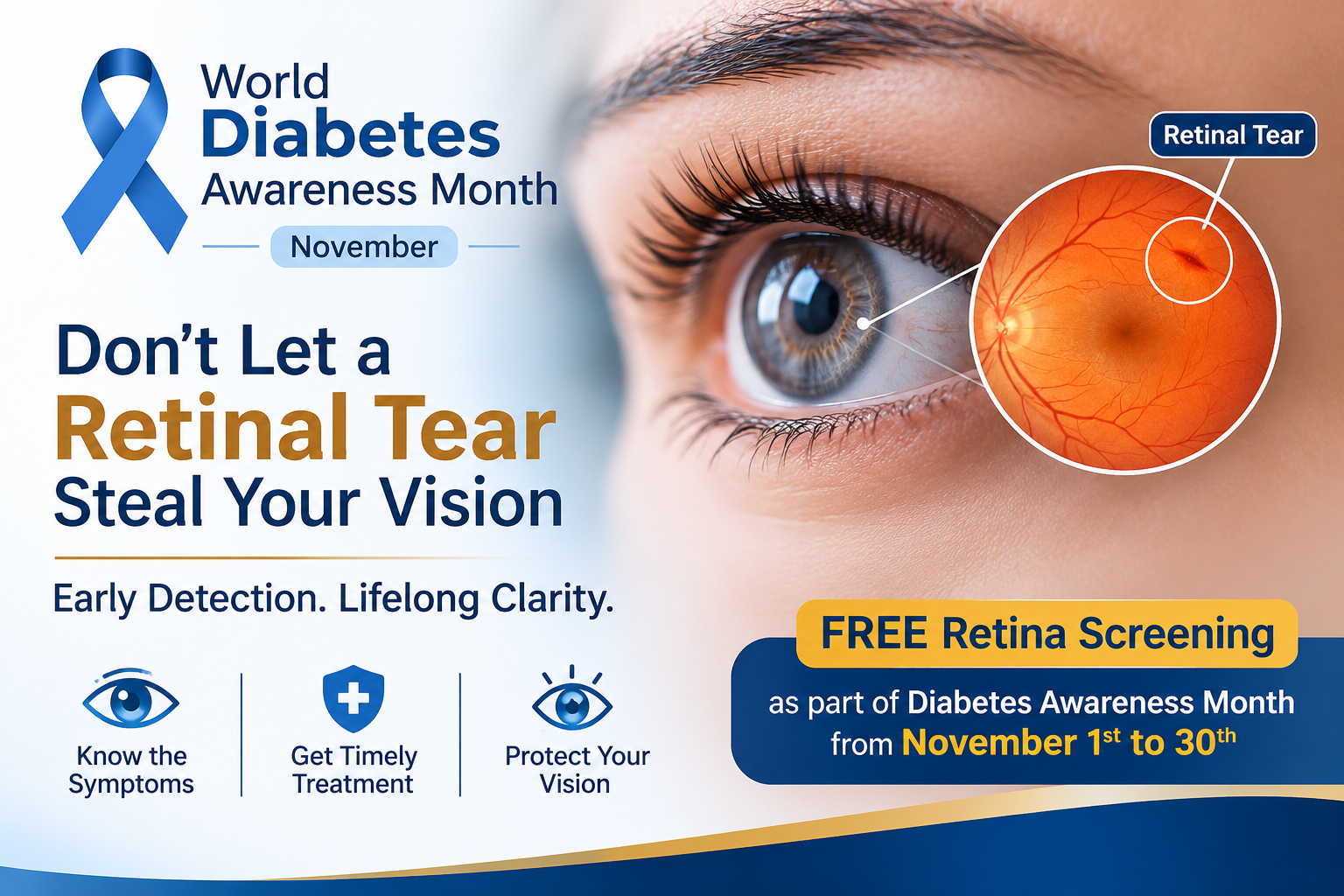
We are offering FREE Retina Screening as part of the Diabetes Awareness Month campaign, from November 1st to 30th.Take a proactive step toward safeguarding your vision. Schedule a comprehensive retinal evaluation today. Contact for details.