Can Diabetes Damage Your Eyes Even When You See Clearly?
Published on: 2026-11-14
When people think about diabetes and vision, they usually assume that declining eyesight is the first and only warning sign. If you can read a text message, drive comfortably, or thread a needle, it is easy to assume your eyes are completely safe.
Unfortunately, that is a dangerous myth.
Diabetes is notorious for working silently. High blood sugar levels can damage the delicate blood vessels in your eyes long before you notice any change in your vision. By the time blurriness or dark spots finally appear, significant damage may have already occurred.
Why people with diabetes need regular retina screening
Diabetes affects the body’s microvascular system; the tiny blood vessels that feed vital organs, including the eyes. When blood sugar levels fluctuate or remain high over time, these fragile vessels begin to weaken, swell, or leak.
Because changes in the retina happen gradually and painlessly, waiting for symptoms to appear is a losing strategy. Routine evaluation, such as a diabetic retinopathy screening near you, allows doctors to catch micro-vascular changes at their earliest, most treatable stage, preserving your long-term sight.
Can diabetic retinopathy develop without blurred vision?
Yes, absolutely. In the early and even moderate stages of diabetic retinopathy, your central and peripheral vision can remain 20/20.
The retina (the light-sensitive tissue at the back of the eye) can experience micro-aneurysms, small hemorrhages, or areas of poor blood supply (ischemia) without affecting the macula (the part of the retina responsible for sha
rp, straight-ahead vision). Only when fluid leaks into the macula (causing diabetic macular edema) or abnormal new blood vessels bleed does vision start to drop. This is why scheduling an eye checkup for diabetic patients is mandatory, regardless of how clear your vision feels.
What happens to the retina when blood sugar remains high?
Think of the blood vessels nourishing your retina as fragile garden hoses. When blood sugar levels stay elevated chronically, the walls of these tiny vessels weaken.
When should someone with diabetes get their first retina screening?
Timing depends on the type of diabetes you have:
- For Type 2 Diabetes: A comprehensive eye exam and retina screening for diabetes should be performed as soon as you are diagnosed, because Type 2 diabetes can go undetected for years.
- For Type 1 Diabetes: Screening should begin within 5 years after the initial diagnosis, typically starting around puberty or as advised by your endocrinologist and ophthalmologist.
- For Pregnant Individuals: Women with pre-existing diabetes who become pregnant need an evaluation early in the first trimester, as pregnancy can accelerate retinopathy progression.
What happens during a diabetic eye screening?
Many patients delay scheduling a diabetic retinopathy test because they fear a painful or complicated procedure. In reality, a screening is straightforward and non-invasive:
- Vision Testing: Your baseline visual acuity is checked.
- Pupil Dilation: Eye drops are gently placed in your eyes to widen the pupils, allowing the doctor a clear window to examine the back of the eye.
- Retinal Imaging / Examination: Using specialized lenses and high-resolution digital retinal cameras, the eye specialist photographs and inspects the retina, blood vessels, and optic nerve for any signs of damage.
What can the doctor identify through the screening?
An expert evaluation does much more than just check your prescription. Through a comprehensive diabetic retina checkup in Kozhikode, an eye care specialist can identify:
- Early signs of non-proliferative diabetic retinopathy (NPDR) like micro-aneurysms and retinal hemorrhages.
- Fluid accumulation or swelling in the central retina (macular edema).
- Advanced proliferative diabetic retinopathy (PDR) marked by abnormal blood vessel growth.
- Early indicators of other co-existing conditions like diabetic cataracts or glaucoma.
What happens if the screening detects an abnormality?
Finding changes early is an advantage, not a curse. If the screening detects early-stage retinopathy, the primary step is often tightening your control over blood sugar, blood pressure, and cholesterol levels.
For more advanced stages, there are highly effective treatments to halt progression and protect your vision, including:
- Laser Treatment (Photocoagulation): To shrink abnormal vessels or reduce swelling.
- Intravitreal Injections: Medications injected into the eye to block signals that cause abnormal vessel growth and fluid leakage.
- Surgical Interventions (Vitrectomy): Reserved for advanced cases involving severe bleeding or retinal detachment.
Regular Follow-up Matter
If your screening results come back completely normal, take a sigh of relief, but do not cross eye exams off your list permanently.
Diabetes is a progressive, lifelong metabolic condition. A normal result today simply means your retina is safe right now. Annual follow-ups ensure that the moment changes begin to occur, interventions can be deployed long before vision is compromised. Searching for a reliable diabetes eye test near me on a yearly basis should become a permanent part of your wellness routine.
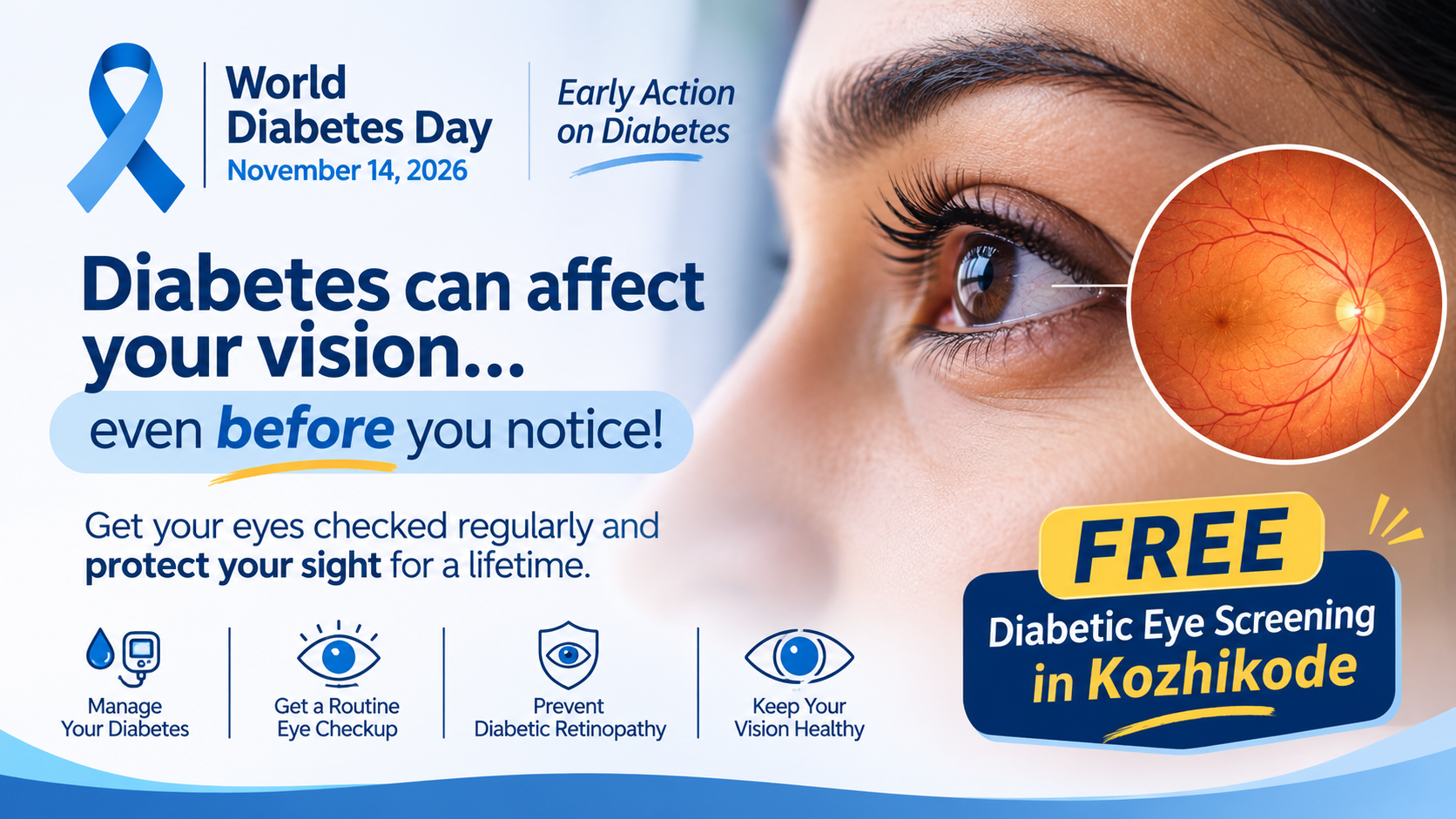
Free diabetic retinopathy screening in Kozhikode
In alignment with the global campaign theme "Early action on diabetes", Malabar Maxivision is initiating efforts to bridge the gap in diagnosis and care.
To honor World Diabetes Day on November 14, 2026, we are offering free diabetic eye screening in Kozhikode to help members of our community safeguard their vision. Because early detection protects independence and quality of life, we encourage every diabetic individual to visit & get their eyes checked.
How to contact the hospital and enquire about screening
The screening is absolutely free. To book your slot or learn more about our special World Diabetes Day eye screening programs and regular appointments, reach out to us through the provided contact number.